

Introduction
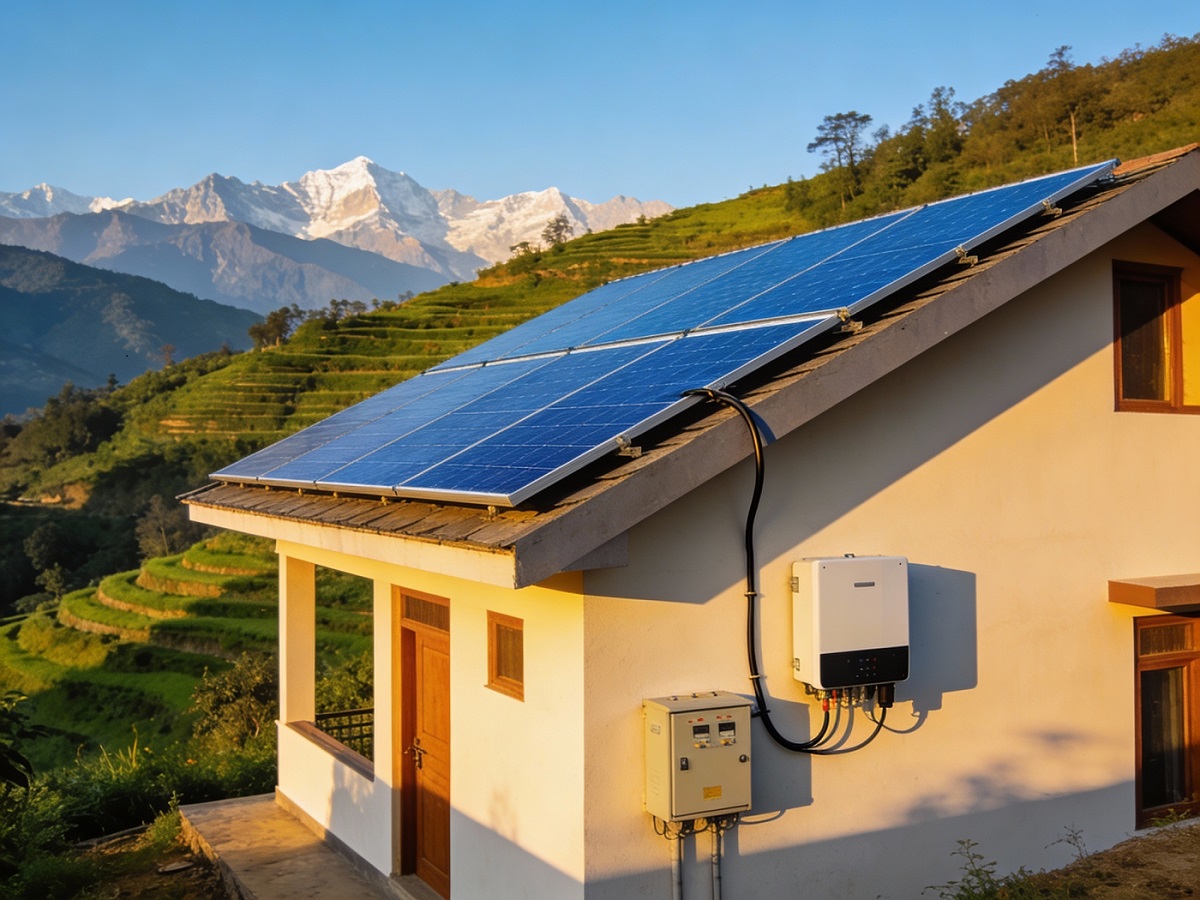
Uttarakhand, with its rich natural resources and abundant sunshine, is quickly emerging as a hotspot for solar power adoption. For many residents and businesses, solar energy provides an economical, reliable, and eco-friendly alternative to grid electricity. But understanding how Solar works and sunlight transforms into the electricity that powers lights, appliances, and more can help users appreciate the technology working silently on their rooftops and make better decisions.
This post will walk through the complete solar power process — from sunlight hitting the solar panels to electricity powering household devices — customized for the Uttarakhand environment.
1. Capturing Sunlight: Photovoltaic Solar Panels
The core of almost every solar power system is the photovoltaic (PV) solar panel. These panels consist of numerous solar cells made from semiconductor materials, primarily silicon. When photons from sunlight strike the silicon cells, they knock electrons loose from atoms, creating an electric current.
Why Silicon?
Silicon’s atomic structure allows it to absorb sunlight efficiently and convert it into electrical energy. The solar cells are layered and connected in series and parallel circuits within panels to increase voltage and current.
Uttarakhand’s Solar Advantage
Due to its elevation and climate, Uttarakhand experiences strong solar irradiance for many months of the year. Even with monsoon seasons, the net solar energy is sufficient to generate power reliably.
2. From Direct Current to Alternating Current: The Inverter
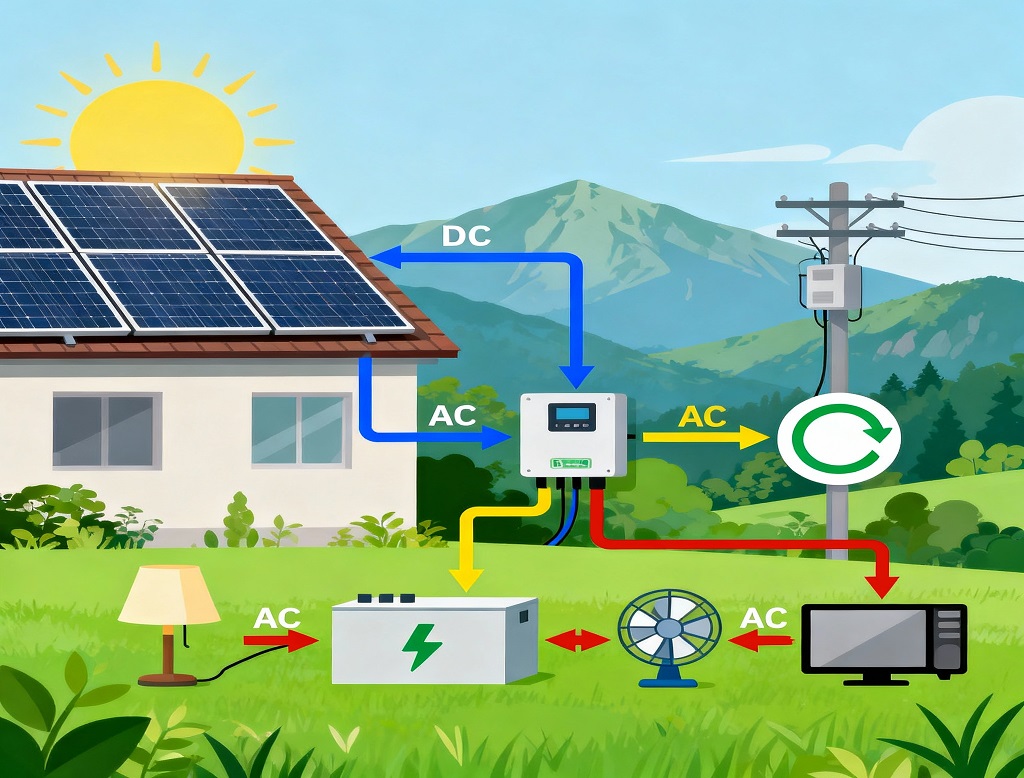
Solar panels generate direct current (DC) electricity. However, household appliances and the power grid operate on alternating current (AC). This is where the solar inverter plays an indispensable role.
How the Inverter Works
The inverter electronically converts DC electricity to AC electricity in real time, ensuring compatibility with the house’s wiring and the grid. Modern inverters optimize power output by adjusting to panel conditions such as shading and temperature change.
Types of Inverters
- String Inverters: Connect panels in series for centralized conversion.
- Microinverters: Attach individually to each panel, providing greater efficiency especially for uneven sunlight or partial shading.
- Hybrid Inverters: Combine functions of power conversion and battery charging in systems with energy storage.
3. Metering and Net Metering: Interaction with the Grid
When solar panels produce more electricity than a household uses, the excess can be fed back into Uttarakhand’s regional power grid. This is managed through a bi-directional net meter.
What is Net Metering?
Net metering allows you to earn credits for surplus electricity sent to the grid, which can be used to offset power drawn from the grid during night or low production periods. This results in significant savings on electricity bills.
Uttarakhand’s Net Metering Policy
The Uttarakhand Electricity Regulatory Commission supports net metering for residential, commercial, and institutional users, making rooftop solar installations financially viable and attractive.
4. Battery Storage: Power On Demand (Optional)
While many solar setups are grid-tied, some systems incorporate batteries to store excess energy. This is especially useful in Uttarakhand’s remote or off-grid areas with unreliable power supply.
Benefits of Battery Storage
- Energy available during nighttime or outages
- Reduces dependence on fossil fuel backup generators
- Enables greater energy autonomy
Battery Types
- Lithium-ion batteries dominate due to high efficiency and lifespan.
- Lead-acid batteries are also common in lower-cost or small-scale installations.
5. Electrical Distribution: Powering Your Home
The AC electricity from the inverter flows through your home electrical distribution board and powers lights, fans, refrigerators, and electronic devices seamlessly alongside or instead of grid power.
Energy Efficiency Tips
- Use energy-efficient appliances and LED lighting to maximize solar benefits.
- Monitor energy consumption and solar generation through smart meters or apps.
- Implement demand response by timing high-energy appliances during sunlight peak hours.
6. Maintenance and Monitoring
Solar power systems require minimal maintenance, but regular cleaning of panels and periodic system checks ensure optimal performance.
Simple Maintenance Practices
- Clean panels gently during dry days to remove dust or debris.
- Inspect wiring and mounting every 6–12 months.
- Use monitoring dashboards provided by inverter manufacturers to track system health.
Why Solar Power is a Game-Changer for Uttarakhand
Environmental Benefits
By switching to solar, residents reduce dependency on fossil fuels, lower carbon dioxide emissions, and help preserve Uttarakhand’s pristine mountain ecology.
Economic Advantages
With government subsidies like PM Surya Ghar and state incentives, the cost of solar power systems has decreased drastically. Many households recover their investment in less than a decade while enjoying free electricity for decades more.
Energy Security
Solar power adds resiliency to Uttarakhand’s sometimes fragile power infrastructure by decentralizing generation closer to where energy is consumed.
Government Support and Subsidies in Uttarakhand
The central government’s rooftop solar schemes, combined with Uttarakhand’s state-level programs from UREDA, provide capital subsidies and priority approvals simplifying solar adoption.
Residents should always consult official government portals for updated subsidy details and approved vendor lists:
- Ministry of New and Renewable Energy (MNRE) – https://mnre.gov.in/en/solar/
- PM Surya Ghar Portal – https://pmsuryaghar.gov.in
- Uttarakhand Renewable Energy Development Agency (UREDA) – https://ureda.uk.gov.in
Conclusion
Solar power in Uttarakhand works by harnessing abundant sunlight through photovoltaic panels, converting energy to usable electricity via inverters, managing surplus through net metering, and optionally storing energy in batteries. The technology is robust, efficient, and backed by strong government support, making solar power one of the most viable options for sustainable energy for homes and businesses across the state.
By understanding the full process — from sunlight hitting the panel to power running through home wires — residents can confidently invest in solar and reap economic, environmental, and energy security benefits that align perfectly with Uttarakhand’s clean energy future.